Let start 2016 – first workshop

twinsrat bonsai's avatarMunster Bonsai Club

We are have pleasure to welcome all bonsai interested to our first workshop in 2016 with Ian Young and Phil Donnelly from NIBS. The event is going to take place 06/02/2016 10.00-17.00 as usually in Mark’s place.

Lovely atmosphere, and lots of knowledge, snacks and tea…

All interested are very welcome and pleas contact me at 0867705560 or twinsrat.bonsai@gmail.com

View original post

Further Thoughts on Turface

crataegus's avatarMichael Hagedorn

A couple years back I wrote a post which became one of most viewed posts I’ve ever written. It was about Turface and similar soil ingredients like Oil-Dri and Profile, and my skepticism about their qualities as a bonsai soil ingredient, following 30 years of experience with many different soil types. The post was meant to call into question the belief that Turface is the best soil ingredient. I don’t believe it is, having witnessed its performance for years, but that doesn’t mean you can’t grow a tree in it, or that it may be one of the few options in your area due to availability issues.

In rough strokes, there have been three main evolutions in our soil usage in North America. Earliest was the potting soil/sharp sand period, decades ago. Then came the Turface era, which was definitely an improvement on the earlier mixes. Then came the volcanic mixes…

View original post 593 more words

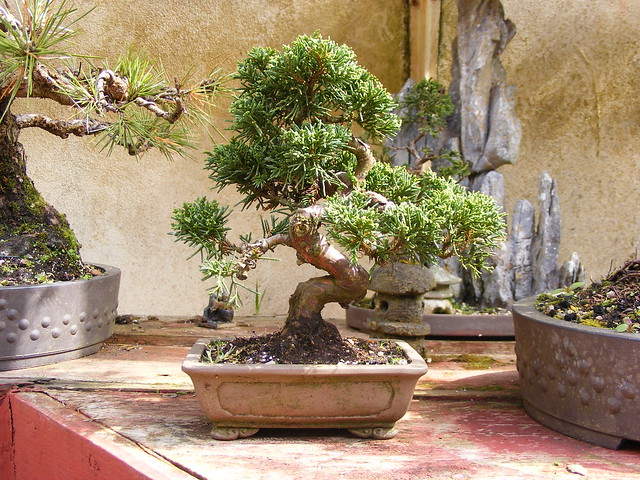
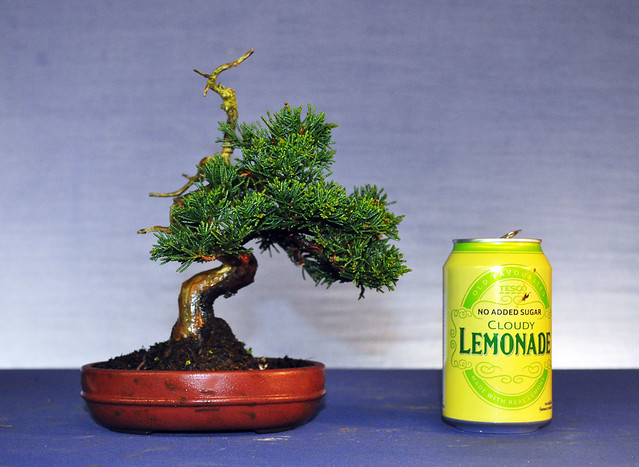
Shohin Chinese Juniper

I got this little Chinese Juniper in 2010 from a great chap called Bob Snaith.He was clearing out his collection and I got this one at a great price. He supplied me with the first photo below. He’d bought the tree from a chap called Micky Paice who had bought it from Windybank Bonsai back in 1999. Always nice to know the provenance of a tree.

This was it in 2010 as I bought it.

I repotted it and let it sit for a year to gain strength. I then explored the idea of chopping it back to the first branch as I didn’t particularly like the contrived trunk line.

Decision made.

This was it repotted into a smaller pot the following Spring 2012 I think.

It’s been tweaked a few times since then but a few weeks ago I decided to fine wire it and transfer it into a new pot I picked up at Bonsai Europa. This is it prior to wiring.


And afterwards

The new pot and chop mark, Yamaaki.

and now after repotting and a new coat of jin seal applied.

Korean Hornbeam – Changes

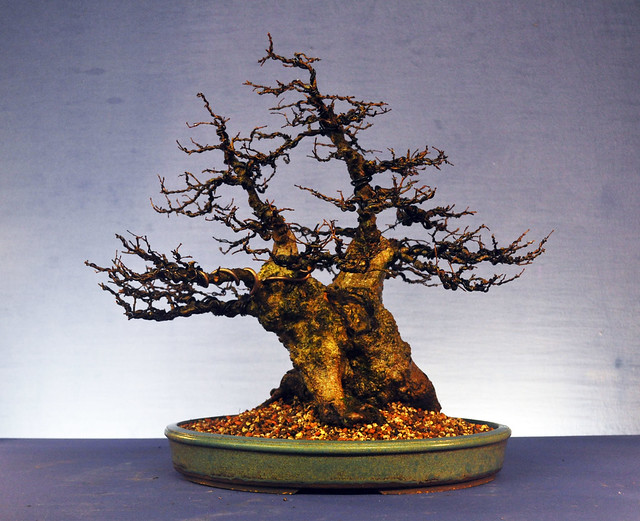
I’ve had this Korean Hornbeam for 5 years now. This was how it looked back in July 2010. It was weak and had suffered for a few years and lost a lot of branches. It took 2 seasons to get it on track and build up some ramification.
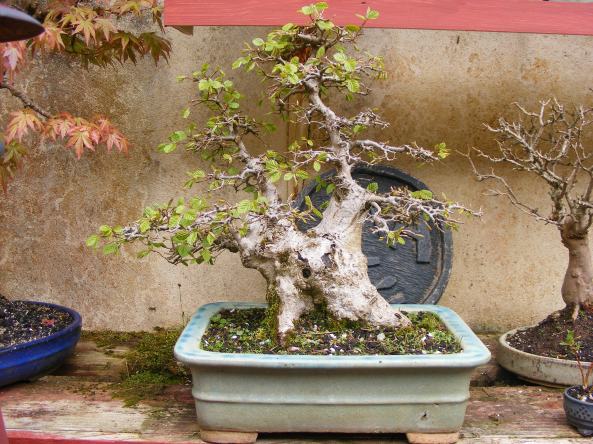
DSCF1409

This was it in 2013

And here in December 2014.

At this point I decided to make a few changes. Both trunks were parallel to each other in the pot creating a very flat image. The main trunk lacked taper along the last portion of the trunk line and about 2 inches from the top is a swelling that looked ugly and was only going to get worse with age. I opted to layer the top off the main trunk to create a little multi-trunk shohin tree for the future. I also decided that I’d change the front of the tree to offset the two trunk creating more depth.

Below is the tree in December 2015 after the layer was removed. I had give the tree free growth for the year to give me a few more options when thinning out the branches.
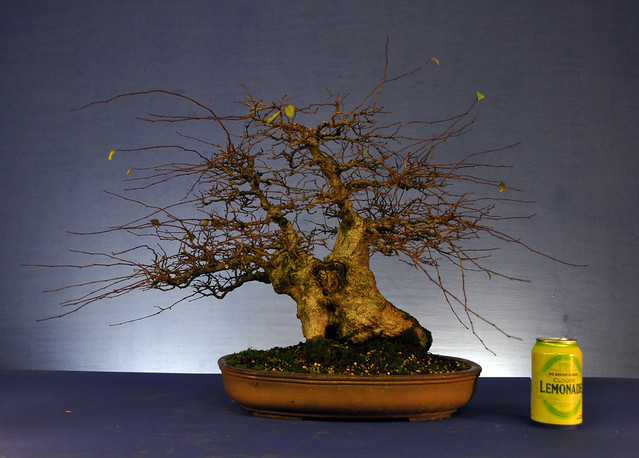
This was to be the new angle for the front. I’d lose a little of the width of the base but give the tree a little more character and depth, hard to see that in a photo of course!
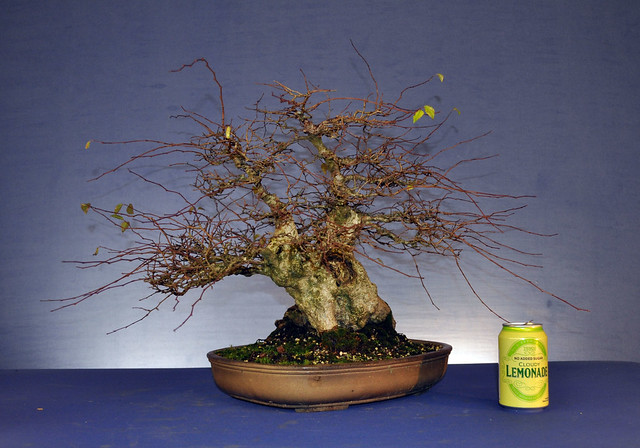
I trimmed back unwanted branches and pruned out a few area that had become too heavy.
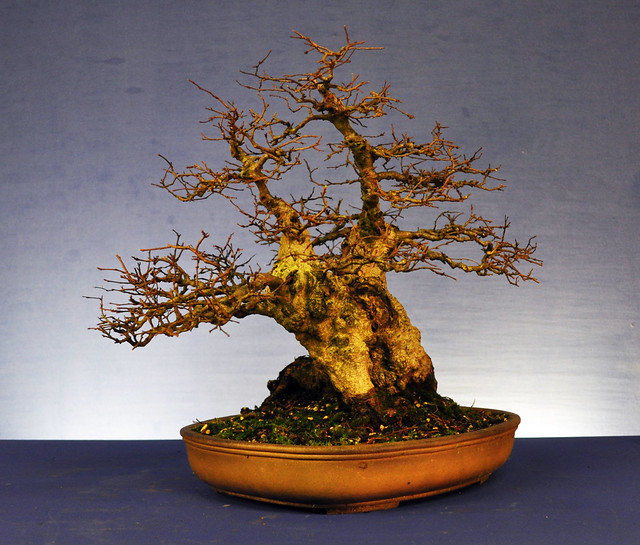
I then wired out the branch structure creating the basics of two new apexes and got rid of a lot of clutter and crossing branches.
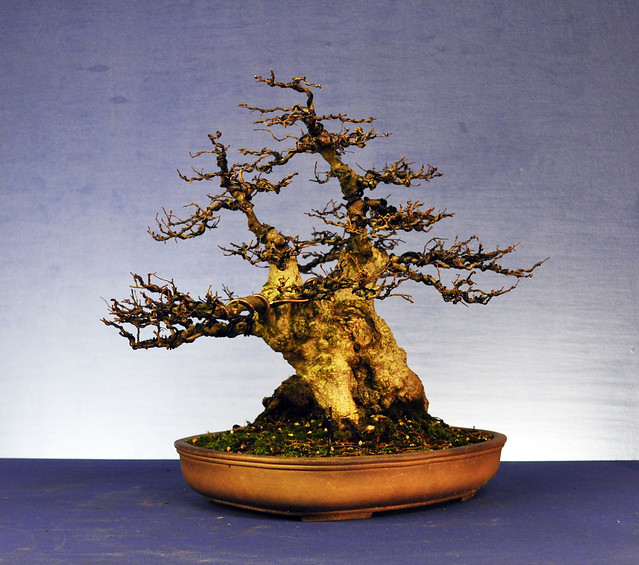
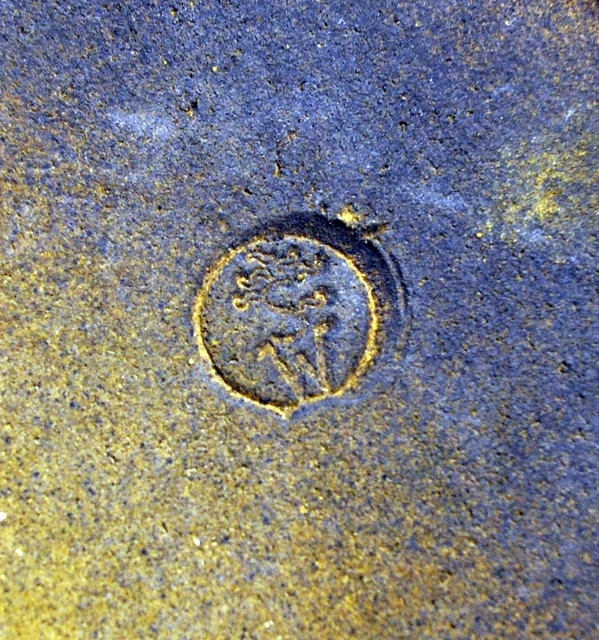
If we are making changes to the front, I might as well repot it. I had a Sylvia Webber pot on the shelf that I love and was itching to use again. I think that’s who the potter is anyway, perhaps someone can confirm from the chop mark below. Is she still making pots? I got this back in 2003.
I transferred the tree over adjusting for the new angle. The pot is perhaps a little shallow looking for such a heavy trunk, but I like it. I was also able to remove an ugly root at the back as a bonus. It’s hard to tell just how much better the image is in a photo, especially as the old front looked good in a photo and this photo isn’t great but trust me, I’m a lot happier with where this tree is going in the years to come. Double the current ramification and I think we have a nice tree in the making. That’s what I love about working on Deciduous trees, there’s no quick image to be had like a conifer, the work has to be done year on year to create a descent bonsai.
Trident Maple Adjustments

Looking at the branch structure of these two Trident Maples I decided to make a few adjustment especially in the lower branches.

A hidden adjustment on the Root over rock is a branch that was previously lying on the top of the rock to the left. This has now been dropped to the back and when in leaf will help add to the depth of the image. With a little work this year and a new pot, perhaps this is an option for Europa 2017 😉

As you can see I have gone through a major Walsall Ceramics faze in recent years 🙂

Friendship: Serendipity of Bonsai

More Bonsai friendship, this time from Tony over on bonsaiko.

tony bonsaiko's avatarBONSAIKO

I’ve been wanting to write  a blog post about this tree for sometime but what to write about it, it’s challenging to decide.  There could be several possible topics that could be written about it but what I will attempt do convey is how this tree developed beautifully throughout the years but how it also became a symbol of friendship.

Around 2005(2006) when I was responsible for bringing in guest artist to Puget Sound Bonsai Association for their monthly meeting demonstration.  I brought in Boon Manakitivipart to the club since I’ve taken his bonsai intensive class before and he is an excellent teacher.  When Boon got here, I took him on a tour at the Elandan Gardens.  At the time my friend Don Guilliams ( who started with the club about the same time I did) volunteered to go with us on the trip.  During the trip I wanted to buy a…

View original post 557 more words

Japanese Larch -First Steps

I collected this Larch about 3 years ago. I was drawn to the natural shari created by wild goats, Sadly some of the branches didn’t open that Spring after collection, the goats really know how to strip bark! I let it sit and establish for a few years and in 2015 put it on my sales bench with a view to moving it on as raw material suitable for a workshop. It obviously didn’t inspire anyone and so I decided to give it a basic shaping a few weeks ago.

This is the before shot.

After a quick look I opted to remove the one live branch at the apex. This had been a twig 3 years ago and had grown strongly but was to far removed from the interesting bits elsewhere on the tree. With the help of my mate Jeff we did some basic stripping of the deadwood and got some wire onto the heavy lower branch. We played with keeping the other branch to the back, but it just didn’t fit with the image.

This is it afterwards. Still cleaning up to be done at this point and a few adjustments but the basic shape is there with some extra branches left as options.

After checking the roots out I decided to go ahead and repot. In the 3 years since collection the tree and filled the box with roots. I put all collected Larch into pure Sphagnum moss and they love it. The problem comes when the moss breaks down and holds too much water, usually after 2-3 years. At this point I repot into a more traditional mix. I was able to jin a heavy surface root as part of the process making a nice new feature and also with the added benefit of raising the deadwood up above the soil surface which will help stop the wood rotting away to quickly.

This is the tree now, cleaned up and lime sulphured, with some more refinement of the deadwood and a year or two’s ramification I think it will make a nice albeit unusual image. A fun piece of material to play about with and for now, it goes back on the sales bench once it opens in the Spring.

What it’s All About

I suppose everyone does bonsai for their own reasons, some for fame and fortune, some for a reason to get out of the house, some for the love of working with nature, some for the pure art of it. The last two hold true for me but the main one for me is friendship. A lot of these friends are local to me but many of you I have never met, just quick chats via social media and if I’m lucky, a face to face chat at an exhibition or two.

There’s nothing like sitting around with fellow bonsai enthusiasts and just enjoying bonsai. The photo below is from a recent session in my garage exploring options on trees and then putting them into action. This in another aspect of 2016 that I plan to increase, good honest enjoyment of bonsai in every way.

Bonsai Europa 2017

Time to consider what I can enter next time 🙂

Video

Video – Daizo Iwasaki Bonsai Garden

Trying to get back into the swing of sharing any interesting videos I find on-line. It’s easy to miss them! Some great trees in this one from Andy Jordan.