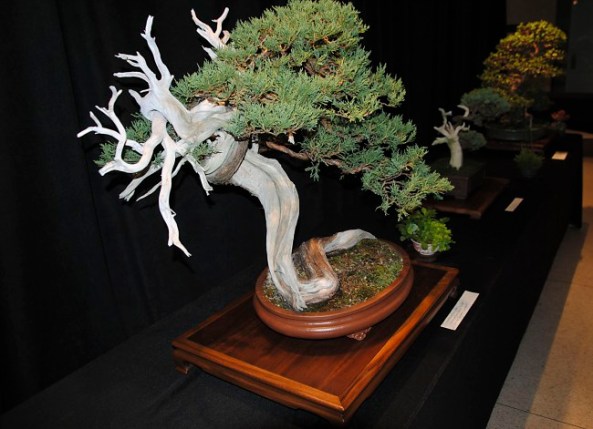
The twistiest of junipers

Truly stunning!!

Airlayering Progression

Graham’s two videos on airlayering a crab apple. This is the original one from 3 years ago.

and this is the new update.

A new chapter has begun

reelbonsai's avatarReelBonsai

Hello all and thank you for the continuing support of my outdated and neglected blog. For those of you who still care (or if you jumped ship and happen to see this I still love you) or if you’ve been left in the dark I hope to clear things up in this post. I recently (2 months ago) returned from an 8 year apprenticeship with my master Shinji Suzuki. It was an honor and great privilege learning from one of the best in the business and I continue to wonder how I got so lucky, but luck turned into hard work and now it is beginning to pay off here in California, the place I’m calling home for the time being. As a major transition thus far in my life, I hope you guys can forgive me for slacking off and not doing any posts since I’ve been back, getting…

View original post 349 more words

The Moss Myth

crataegus's avatarMichael Hagedorn

I remember the days when moss was the enemy. The idea was that moss impeded water penetration, or kept the pot too wet. So it was a surprise when I was an apprentice that Mr. Suzuki encouraged moss to grow on the soil, and I discovered there were some advantages to having it there.

Shredded sphagnum moss on top of volcanic soil (akadama/pumice) at 1/8-1/4″ thickness, with shredded live moss added to inoculate. I often add ink to it so it’s not straw colored while the moss gets established. Be sure you use true sphagnum moss, not peat moss. Peat moss is rotted sphagnum, and tends to be water repellent when dry. The best sphagnum to use is sold often as ‘orchid’ moss, and is straw colored and is like a sponge when sprinkled with water.

If applied in the early spring around repotting time, a carpet of live moss…

View original post 103 more words

BSA Exhibition Video Parts 3&4


Two more for you.


Accent Rhodohypoxis Deflexa

2014 Nashville Regional Bonsai Expo

Always happy to reblog a Show or Exhibition post.

William N. Valavanis's avatarValavanis Bonsai Blog

Image

The 2104 Nashville Regional Bonsai Expo will be held on July 12-13th at the Cheekwood Botanical Garden, in Nashville, Tennessee. Over 50 bonsai from the southeast will be displayed along with kusamono.

 Image

Guest artists for the event are Jim Doyle, Young Choe and Owen Reich who also heads the event. In addition to lecture/demonstrations by Jim Doyle and Young Choe, two kusamono classes will be conducted along with a collected Engleman spruce workshop. A bonsai refinement workshop will also be offered. Jim Doyle will conduct a critique of the displayed bonsai and Young Choe will critique the kusamono.

 Image

Jim Doyle

Confirmed vendors for the sales area include: Fedducia’s Bonsai, Bellota Enterprises, MC Squared Ceramics, Glass Art by Jacob, Kusa Farm, Bonsai Unearthed, Lynnwood Gardens, Turnbull Creek Bonsai, Nature’s Way, The American Bonsai Society, Cedar Bog Bonsai, New World Horticulture and International Bonsai.

 Image

Young Choe

The general…

View original post 184 more words

Accent – Gunnera!

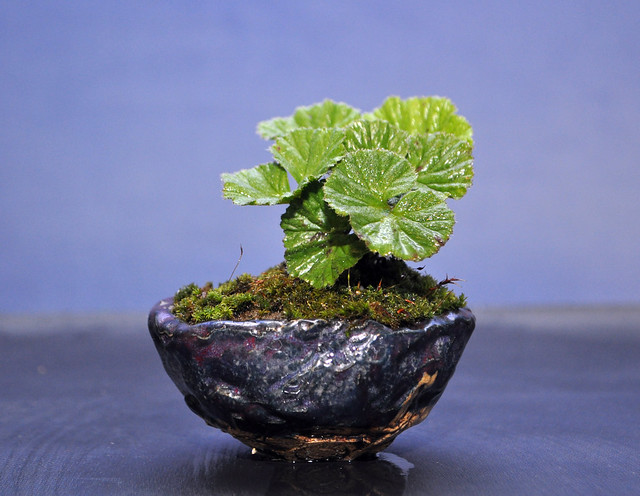
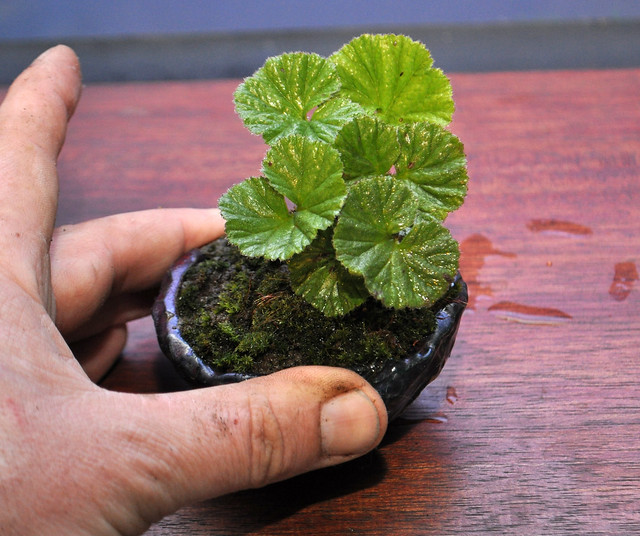
No, not one of the hugh leafed Gunneras that we see blotting the landscape. This is one of the small varieties that hails from New Zealand I think. I don’t have the full botanicial name for it and if one of you plant nerds can ID it, I’d love to know. I can’t remember seeing one as an accent before but I’d love to be proved wrong on that point. I got this one from Pat in Waterford in a plant swap session. Cheers Pat, I love it. Pot is a Wallsall Ceramics creation.Again, it’s going to take a while to fill out but I’ll keep you posted with how it matures.


Welcome Home Old Pal

Peter Snart kindly delivered my Root Over Rock Trident Maple back to me a few weeks back. It had been over at Willowbog Bonsai for the BSA Exhibition. This is it as I got it back. A little over grown but in fine health as you’d expect 😉

I had to address the overgrown shoots that had now overly thickened some of the outer canopy. The only way I could do this was by defoliation and then thinning out of the fat areas. This was it after defoliation.

and again after thinning out, you can see I’ve also removed the moss, I want to be able to keep an eye on the watering better and the moss was obscuring my view of this and also taking some of the water for itself.

In hindsight I have missed an opportunity 😦 I should have left the bottom few branches untouched to allow them to fatten further to get a better balance in the tree. Ah well…


Spectacular Sierra junipers