Loading the Tunnel

I popped over to see Phil and his trees on Thursday. I had left my camera at my arse and was only able to grab a few phone shots.

He was in the process of cleaning up his trees and placing them into the Poly Tunnel. Most have been placed onto the hot bed. They had to be, it’s 3×2 metres!

Some trees still outside awaiting attention. Bigger tunnel??

Meteorological Winter Starts Today

Obviously Mr Madden doesn’t like getting misquoted, and who can blame him. Therefore I’ll let him talk for himself in this clip. I will say that it is bloody cold this morning and de-icer was required on the car for the school run!

Taikan-ten 2011 Photos

I trawl the net everyday looking for decent bonsai related stuff. Facebook, websites, blogs, forums, etc. all get a look. When I find something of interest to me, I like to share a link to it here.

This is link to Peter Tea’s blog where he has posted some very nice, and rare, shots from Taikan Ten 2011. Photography is limited at the show and most of the photos here show trees in various areas while the staging and judging is taking place. I actually find this very interesting in itself. We never get to see how they judge these shows.

Just click on Peter’s photo below to view his blog post.

Phil’s Quince

Phil would be one of my closest friends in the bonsai scene in Northern Ireland. We don’t always agree on what way a tree should go, which I think is a good thing. It leads to more debate and different ideas.

Anybody who knows Phil will know what I mean when I say he’s a bit of a header!! That’s a local term similar to eejit 🙂 To highlight this I thought I would share these photos with you. It is typically how Phil shows you the scale of a tree.

This is his Quince, recovered from an overgrown garden over 10 years ago.

and for scale….

Club Post Link

I just added this Post to the Club Blogsite:  Hugh’s Juniper.

I thought I would add it here as well as it’s far too cold for me to venture outside and actually do some work on my own trees 🙂

You can read all about it over on the club site, but basically it’s this Juniper getting a long over due haircut.


Virtual Bonsai

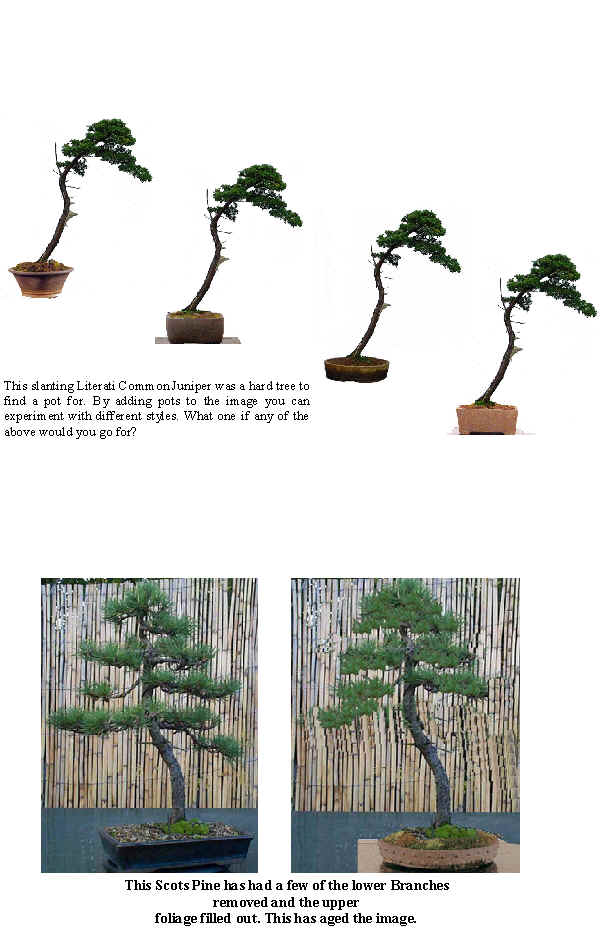
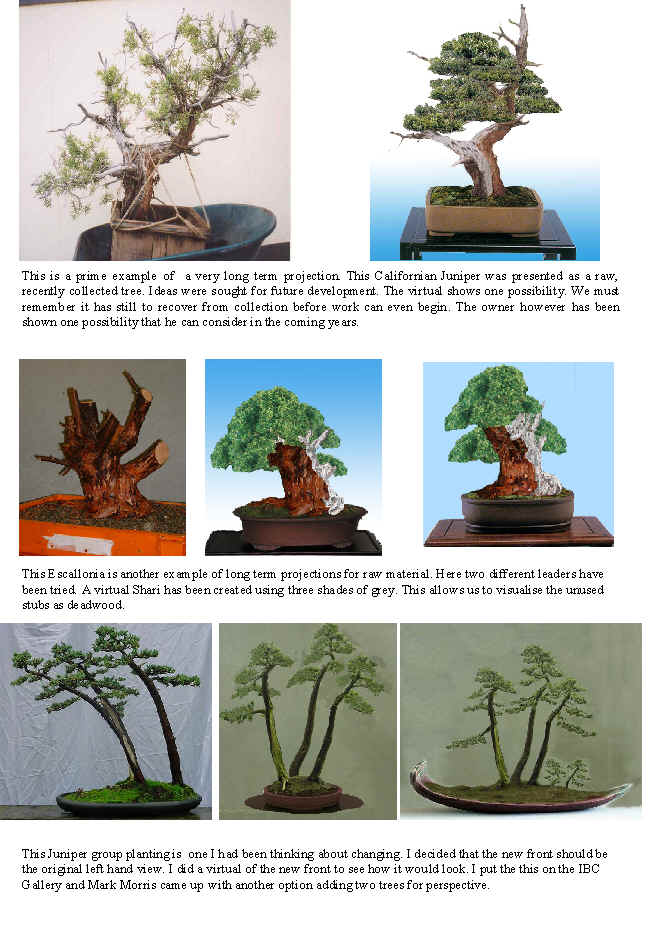
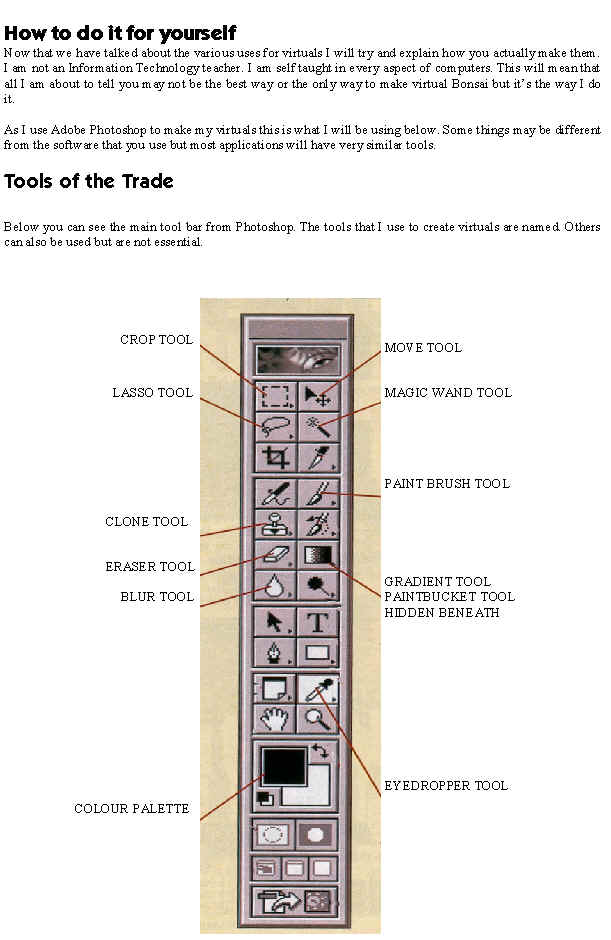
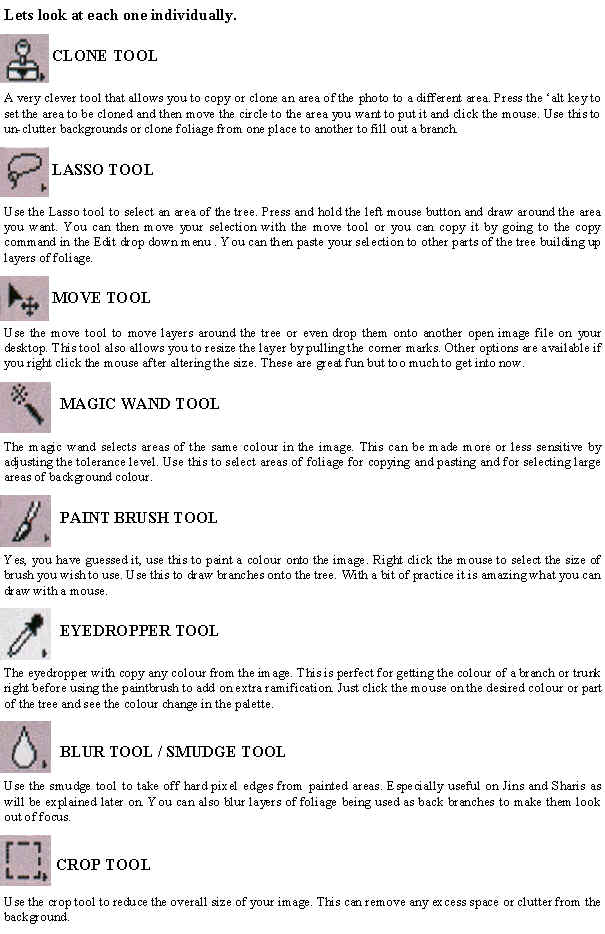
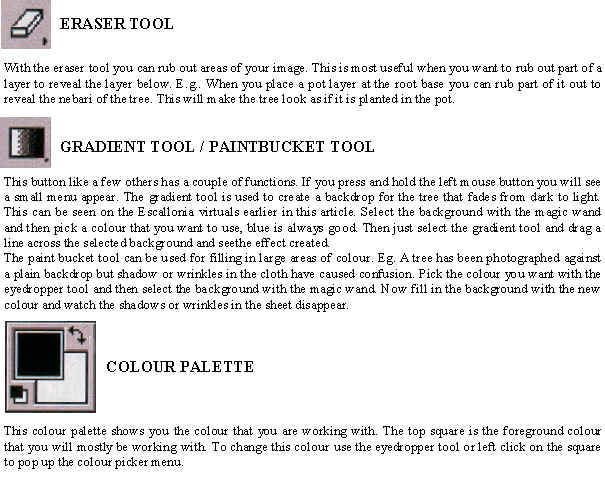
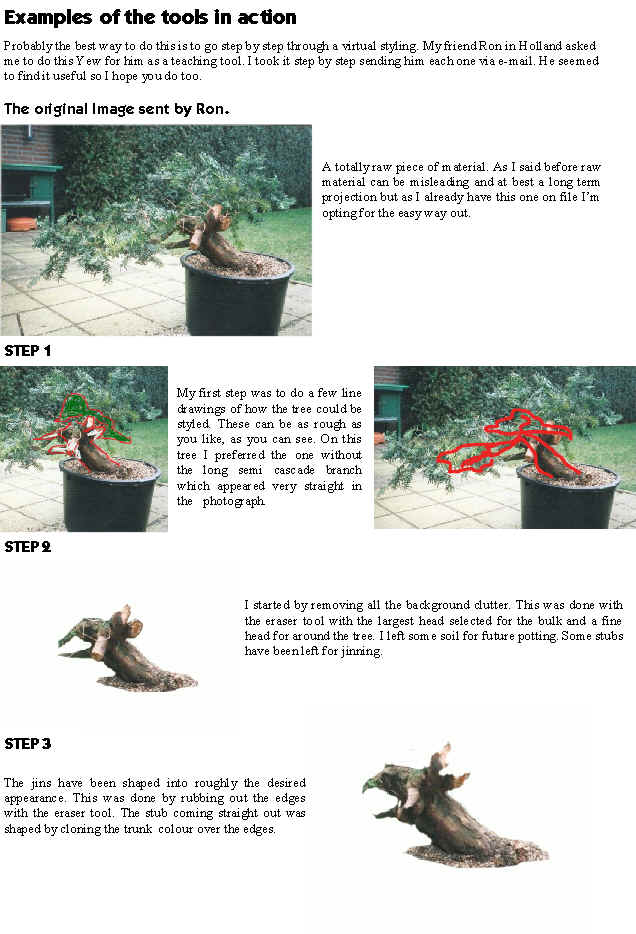
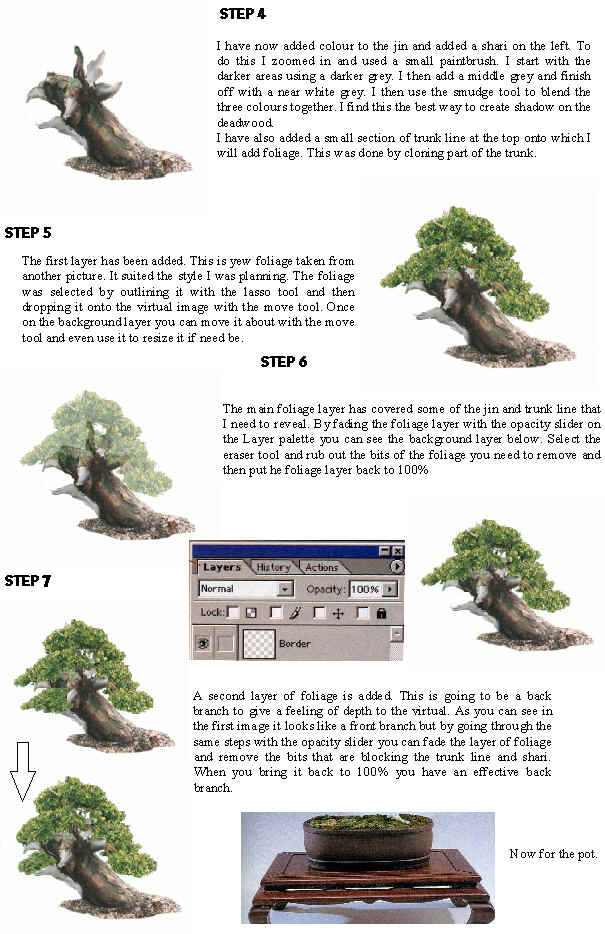
I have been asked by a few people about virtual bonsai. I like to use photoshop to try different pots on my trees, add foliage or remove a branch. I Did an article for the club website a few years ago about how I did this. For anyone who uses Photoshop already, this won’t interest you. However, if you are new to the software, it should help. The screen shots are from an older version of Photoshop than I use now but the basic layout is still the same. I have reproduced this article below

Creating Virtual Bonsai

Virtual Bonsai is fancy title for changing or creating bonsai images with computer software. This article will hopefully help the uninitiated get involved with this wonderful way of making decisions with your bonsai without having to lift a pair of Branch Cutters.

Dan Barton was one of the first to start using computer software for projecting his ideas for a trees future. Several articles were published in the UK Bonsai Magazine. (Issues 43 –45.) My own introduction to virtuals was on the Internet Bonsai Club Gallery in 2000. I was amazed with the virtual results created from some of the trees I posted to Gallery. I was instantly hooked and set out to learn how to master this very helpful tool.

Getting started

Computer

The most obvious requirement is a computer. Nothing too fancy though, most home computers are quite adequate. Any computer currently on the market will more than suffice.

Software

Now you need the software programme that will allow you to alter the Bonsai images. There are lots of these on the market. Most PC’s come with Microsoft Paint, which is a basic programme and will do most things you require it to do and the beauty of it is that you probably already have it. I personally use Adobe Photoshop or Photoshop Elements a smaller and cheaper version without some of the frills. Photoshop is a proven leader in the field and will do everything you need, but don’t take my word for it, try a few programmes out. You will find lots of free demo versions with computer magazines. When you find one you like, stick with it.

Getting the bonsai into the computer?

Scanners

A scanner is a great way to get your hard copy photograph into the computer. I personally scan all my Bonsai Photos and keep them on Disk for future use.

Digital Camera

A digital Camera is the quickest and easiest way to get a bonsai image into the computer. It is an expensive  outlay but you will save on getting all those unwanted photos developed. The main benefit is that you can snap the tree in the garden and then pop it straight into the computer and work on it. No waiting for the photos to come back from the Chemist.

Internet

Another way to get bonsai photos to play with is to download them from a website or Gallery. These won’t be your trees but you will learn the same lessons as you would with your own. Why not go to the IBC Gallery and get some photos. When you have played with them you can put them back on the Gallery and see what everyone thinks. A great learning experience.

The following are the main ways you can use computer software to assist with the decision making and styling of Bonsai.

Pot selection

We all have trees with which we struggle to find a perfect pot. You think you have the right one but a year later you are looking for a replacement. Now you can put your tree into as many pots as you like and compare them before making a decision on which pot to buy. You can also share the images with others to see if they agree with your choice, they rarely do!

Irish Trees and Towns

As it’s pissing it down today and I have absolutely no photos to share with you, I thought that for today’s post I would share an article written by a club member a few years back.

It was written by one of the founding members of our society, Victor Corbett. Victor is a fluent Gaelic speakers and had mentioned at a club meeting that many of the place names in Northern Ireland had their meaning linked to trees in the Irish language.  We asked him to write this down for us to share with all our members, and that is what you can read below. For those who follow this blog with a Gaelic background, be it Irish, Scottish or Welsh, I thought you might find it interesting….

Following the very interesting and informative discussion on Native Trees at a Society meeting, it occurred to me that where better to identify truly native trees than by understanding the meaning of some of our local place names.

 I’ve always had a general interest in this subject – local descriptive place names are generally derived from the Gaelic language originally spoken in NE Ireland and is still widely spoken today in the Western Isles and West coast mainland of Scotland. After all Scotland got its name and language from a tribe called Scotti which lived in the Dalmade area of North Antrim in the 5th & 6th Centuries. Some of the ‘Scots’ emigrated to Argyll and Isley, ousted by Picts and established a nation and language which still exists today, but enough of the history!

In the Dromara area of Mid-Down where I spent much time among the farming community there was a local hill called Singer’s Mountain – its proper name was Mullaghdrin, meaning the hill-top of Blackthorn, drinn being the Gaelic for Blackthorn. To this day it’s still a tangle of Blackthorn scrub.

Not far away in the opposite direction is the Townland of Aughnaskeagh – the fields of the Hawthorn. Any name containing Skeagh or Skea indicates the presence of Hawthorn, eg. Lisnaskea – the hill fort of Hawthorn.

The Oak is widely referred to in many place names containing Derry from Doire, an Oak tree.Londonderry itself, Edenderry, the hill brow of Oaks, and Deramore in the Malone area of Belfast is derived from Doire Mor, the great Oak that used to exist in the area.

A few others for consideration :-

Alder : Fearna

eg. Cloughfern, the rock of the Alders

Birch : Beithe

eg. Beaghmore, the big Birches.

Rowan : Caorunn

gets its name from the second syllable in the Gaelic name for Mountain Ash.

Yew : An Iubhar,

Pronounced An-your-uh. Easily becomes Newry, also Ballynure.

Holly : Cuileann

eg. Slieve Gullion, Collin Glen.

Willow : Seileaeh

eg. Ballysallagh, the town of the Willows. Willow is often referred to in country areas as the Selly – Very similar to the botanical name Salix.

One tree I can’t identify yet in any place name known to me is the Scots Pine – Giubhais, but if you know of any place name ending in ‘ooish’, you’ve probably located one.

Caledonie, the poetic name for Scotland, I suggest is derived from ‘Coille Donn’, the brown wood, which describes the old Caledonion Pine forest, originally widespread over the Scottish Highlands. Caledon is also a local name in Co. Armagh.

So keep your eyes and ears open and some of our peculiar place names might give you a clue to original locations of native trees. Finally, have you ever given any thought to the place where we hold our meetings? Cregagh, its from Creagach meaning a rocky place and there’s still a Rocky road up the hill there.

 Victor Corbett

Another Weather Update

I hope he’s wrong, but I bet he isn’t!! 😦

Winter Image Corkie Elm

You many remember this Cork Bark Elm ORIGINAL POST

This is it now without leaf. A little tidy up required but I’m very happy with the ramification. A nice pot in the Spring will make a big difference.

Sunrise on Sunday

Took these this morning as I went out the door for my Sunday walk.

As it was very windy with sea spray everywhere on my walk, I kept the camera in the bag. Then, right at the end of the walk, I spotted Alien Spaceships attacking Belfast Harbour!! Well, it looked like something out of Stargate until I spotted the Kite Surfers underneath 🙂