As it’s pissing it down today and I have absolutely no photos to share with you, I thought that for today’s post I would share an article written by a club member a few years back.
It was written by one of the founding members of our society, Victor Corbett. Victor is a fluent Gaelic speakers and had mentioned at a club meeting that many of the place names in Northern Ireland had their meaning linked to trees in the Irish language. We asked him to write this down for us to share with all our members, and that is what you can read below. For those who follow this blog with a Gaelic background, be it Irish, Scottish or Welsh, I thought you might find it interesting….
Following the very interesting and informative discussion on Native Trees at a Society meeting, it occurred to me that where better to identify truly native trees than by understanding the meaning of some of our local place names.
I’ve always had a general interest in this subject – local descriptive place names are generally derived from the Gaelic language originally spoken in NE Ireland and is still widely spoken today in the Western Isles and West coast mainland of Scotland. After all Scotland got its name and language from a tribe called Scotti which lived in the Dalmade area of North Antrim in the 5th & 6th Centuries. Some of the ‘Scots’ emigrated to Argyll and Isley, ousted by Picts and established a nation and language which still exists today, but enough of the history!
In the Dromara area of Mid-Down where I spent much time among the farming community there was a local hill called Singer’s Mountain – its proper name was Mullaghdrin, meaning the hill-top of Blackthorn, drinn being the Gaelic for Blackthorn. To this day it’s still a tangle of Blackthorn scrub.
Not far away in the opposite direction is the Townland of Aughnaskeagh – the fields of the Hawthorn. Any name containing Skeagh or Skea indicates the presence of Hawthorn, eg. Lisnaskea – the hill fort of Hawthorn.
The Oak is widely referred to in many place names containing Derry from Doire, an Oak tree.Londonderry itself, Edenderry, the hill brow of Oaks, and Deramore in the Malone area of Belfast is derived from Doire Mor, the great Oak that used to exist in the area.
A few others for consideration :-
Alder : Fearna
eg. Cloughfern, the rock of the Alders
Birch : Beithe
eg. Beaghmore, the big Birches.
Rowan : Caorunn
gets its name from the second syllable in the Gaelic name for Mountain Ash.
Yew : An Iubhar,
Pronounced An-your-uh. Easily becomes Newry, also Ballynure.
Holly : Cuileann
eg. Slieve Gullion, Collin Glen.
Willow : Seileaeh
eg. Ballysallagh, the town of the Willows. Willow is often referred to in country areas as the Selly – Very similar to the botanical name Salix.
One tree I can’t identify yet in any place name known to me is the Scots Pine – Giubhais, but if you know of any place name ending in ‘ooish’, you’ve probably located one.
Caledonie, the poetic name for Scotland, I suggest is derived from ‘Coille Donn’, the brown wood, which describes the old Caledonion Pine forest, originally widespread over the Scottish Highlands. Caledon is also a local name in Co. Armagh.
So keep your eyes and ears open and some of our peculiar place names might give you a clue to original locations of native trees. Finally, have you ever given any thought to the place where we hold our meetings? Cregagh, its from Creagach meaning a rocky place and there’s still a Rocky road up the hill there.
Victor Corbett




 On old rotten stump with beautiful deadwood.
 Some of the landscape we crossed. The sheep moved away when they saw the dogs appearing.
 Old Gate pillars made from Scrabo Sandstone. No longer used as a gate as the gap isn’t wide enough any more for modern machinery. New gate beside it.
 We saw many trees along the walk that had fallen since our last visit. This one blocked the path.


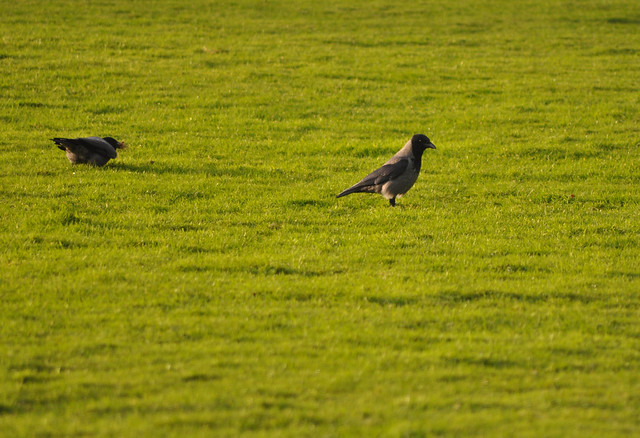
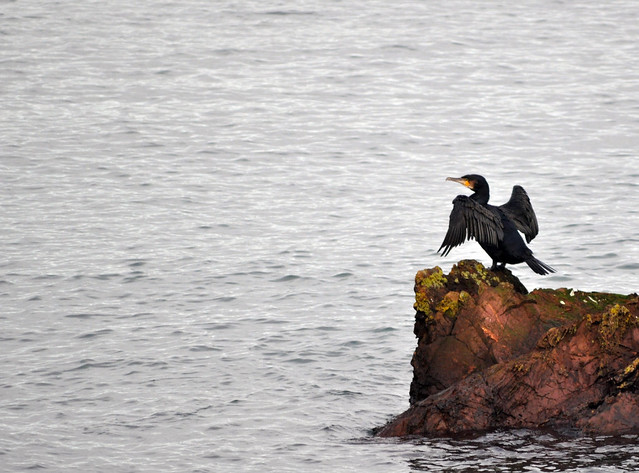
 Birds were the highlight for the rest of the walk. Here are a few we saw.





 A few other feather free shots.


 Bonsai Eejit