Goblin Swamp

One of the most unusual places we visited on our camping trip was the Goblin Swamp at Snottygobble Loop. Yeah, that’s what it’s called 🙂

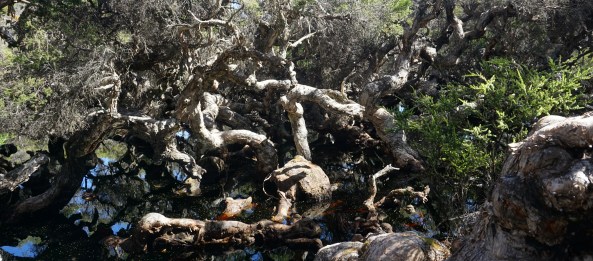
Tucked away in a pretty hard to find spot, long kept secret by the locals, this swamp was small but packed with a low lying area full of old tangled, tortured looking melaleuca trees, better known as paperbarks. I was spellbound. The age of these trees is unknown but of all the Melaleuca I saw in Australia these topped the chart. Trunk movement to keep your head spinning for days. The swamp water was a red colour with the tannin leeching out of the trees. You can see why the swamp got it’s name. It could easily be used as a location in a Lord of the Ring movie. Aussie Orcs! I’d loved to have been there as the light faded for more photos but sadly we had to move on.

Here’s the gallery which also included a few snaps from along the 500m path from the campsite to the swamp.

Climbing to New Heights

As part of my tour south of Perth last November we did some camping in areas known for large Karri Trees aka Eucalyptus Diversicolour. These are beautiful trees with peeling bark and soaring apexes . They are also survivors as they cope with bush fires frequently over their life span.

I have added some photos in a Gallery showing our trip through the area over the first couple of days camping. First night was a free camp at a stunning pool called Greenbushes. I think this was my favourite spot of all 10 days camping.

We then moved onto Pemberton (via Beedelup Falls), a logging town and home of one of the two Bush Fire lookout trees I climbed. The first one was called the Gloucester Tree 53 metres tall. These are trees that have rebar spikes hammered into them in a spiral to the top were a platform gives you a commanding view of the surrounding bush. They used to have Rangers at the top of these watching for fires. Helicopters have now taken over this role. I visited the museum in Pemberton and took a few snaps of the old photos of the tree being prepped for climbing and a few of the bigger ones being logged. It’s a scary climb and one my knees will never forget! But worth it to see out over the bush. I thought one was enough but my Aussie family thought other wise. The took me to the Dave Evans Bicentennial Tree 75 m (246 ft) and I climbed that as well. Even taller and a scarier climb to boot. It’s a real pity that the biggest of them have been logged. Australia as a whole have logged the biggest and the best and we have lost some stunning trees. They say that Mountain Ash on the Eastern coast were taller even than the Coastal Redwoods in California, but the tallest ones up to 143 metres were felled. you can read more info about the Karri on the photos themselves.

Tingle Trees

Western Australia has a 6000 hectare area which has the only Tingle trees in the world. Also know as Eucalyptus Jacksonii, this species is one of the tallest species in the world and in many ways reminded me of the Coastal Redwoods in California. These shallow rooted, buttressing trees have also managed to survive the bush fires and in many cases have hollow trunks so common in Redwoods.

I had the pleasure of visiting the Valley of the Giants near Walpole and taking the tree top walk there. I also visited the ancient Tingle tree and other surrounding Red Tingles with amazing character. 2017 really was a year of tree inspiration for me.

Here’s a few video clips that help capture the size of these trees and a gallery of photos for the Red Tingles.

The Pinnacles

I was lucky enough to get a trip up to the Pinnacles with family during my visit. It was on my must see list.

These limestone formations can be found in Namburg National Park and are a pretty awesome sight. Not only that, they have lots of small trees as companions, many of which would be perfect yamadori if only they were collectable. Of course, as a national park they are protected and rightly so. I have no clue as to most of the species and I’d love someone to identify them if they know. The one with yellow flowers was special.

Here is a gallery of my rock and tree pics. The only drawback was the bloody flies!!! Nets were a must or they’d drive you mental. I’m told it’s just the time of the year. Bad timing on my part. I also added a few photos from Hangover Bay, The Stromatolites near Cervantes, and from the National Park in Yanchep, These were either nearby or my way back to Perth. Worth a visit for the wildlife.


Perth Bonsai Tour – Dianne Boekhout

Last stop on my one day tour was with Dianne. As the chairman of my local club I can only guess at the work involved in being President of the Bonsai Society of WA  and President of the Association of Australian Bonsai clubs Two job titles held by Dianne.

CJ joined us for a look around Dianne’s growing bonsai collection. Again, there were many natives at various stages on view and to my delight, some accents 🙂 If only I had taken a few notes, or posted sooner, I might have remembered the names of the natives I was so impressed with. It was great to spend time in her garden just chatting all things bonsai with her and CJ. I could have sat there all day. Great to bounce ideas around and discuss clubs.

It was only a day, but I could get used to bonsai in Perth very quickly. Great weather, good company and heaps of natives to experiment with. The relaxed way of the Aussie appeals to me. Something to think on..

Dianne, that you, I hope to see you and the rest of the members again soon and perhaps be able to spend a little more time getting my hands dirty instead of pointing a camera.


Perth Bonsai Tour – John Di Vincenzo

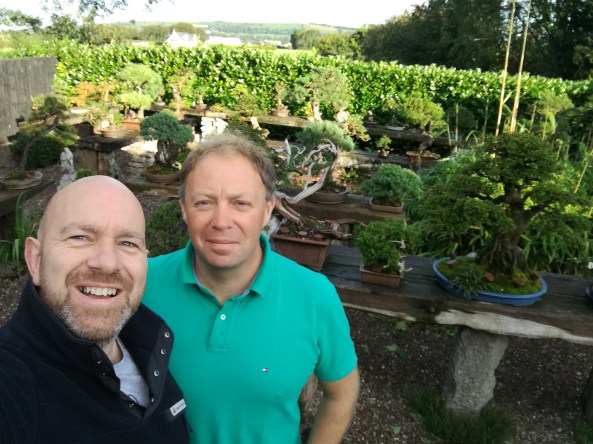
After hooking up with some members of the Bonsai Society of Western Australia at a workshop, I was kindly invited to visit the collections of a few members. First up was John Di Vincenzo. Joining me at John’s garden was Nigel Atkinson, another club member who I met at the workshop.

We had a great time viewing John’s extensive collection. I was especially interested in the true native species of which John had many. Australia has strict rules about collecting yamadori but I was amazed to see some great Melaleuca that looked as if they were ancient. John was able to show me photos of these trees from previous years and the humble beginnings they had. The potential for this species to make quality bonsai is high. I only wish I could name the other species for you but I’m afraid I was too busy looking at the trees to worry about the names. You’ll also see Ficus, Olives etc which lend themselves well to this climate. Import restrictions mean that imported bonsai are pretty much non-existent in Western Australia. This means that everything you see are locally developed trees which makes it more interesting to explore the benches.

A massive thank you to Nigel for organising the tour and or course to John for his hospitality.


Western Australia Coastal Images

Some of the most stunning scenery in this part of the world was along the coast. Stunning sunsets, blue seas, exciting wildlife, and of course trees, or more accurately, shrubs.

The following gallery shows some of the stunted trees surviving along the rocky coastal areas, many skeletal images after bush fires have had their way over the years. The beaches and rock formations are worth a mention. Some stunning white beaches, with rarely a human in sight and a wide range of rock types that must surely make Australia a suiseki paradise in the making.

The following pics are taken at places such as Elephant Rocks, Cape Leeuwin, Gnaraup Beach, Discovery bay, Windy Harbour and Torndirrup.


Leinster Bonsai Club Study Group

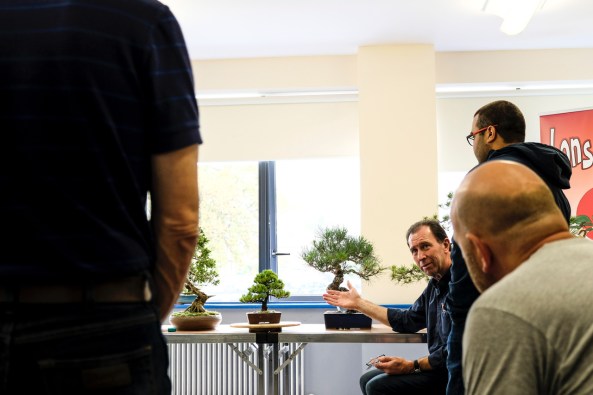
It was a pleasure to be invited by the Leinster Bonsai Club to deliver a study group session earlier this month. I popped down for the first of 6 sessions and was met by a group of motivated guys keen to push on their own learning and share knowledge with each other. Looking forward to the next session in December. Here’s a few photos from the session.

The session focused in on how to critique trees looking at the fundamentals of bonsai design and the species in focus on the day was Pinus. This club has a few big changes coming on the horizon, keep an eye out for more content from them soon. If you live in the Dublin area and want to get involved please get in touch with LBC

Grand Tour September 2017

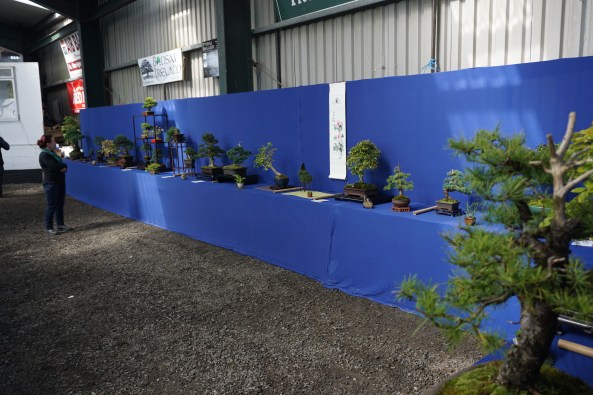
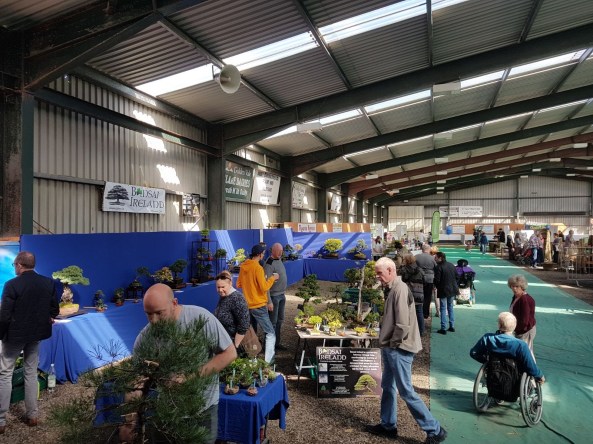
It’s been full on lately with both bonsai and family and the blog has taken a back seat as a result. I’m now playing catch up and thought it only right to share some of the photos from my trip down to Munster to do a few one to one sessions with the folk in the Munster Bonsai Club. A more enthusiastic bunch I’ve yet to meet. I was also lucky to time my visit with their first ever exhibition which, for me, was the highlight of the week.

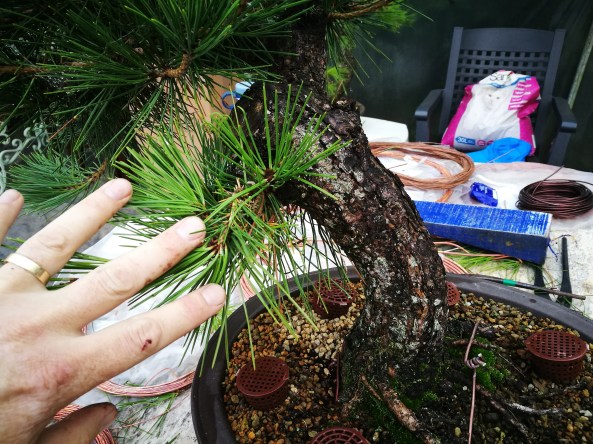
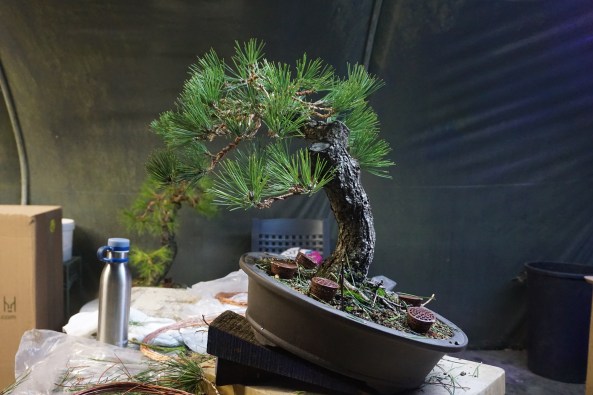
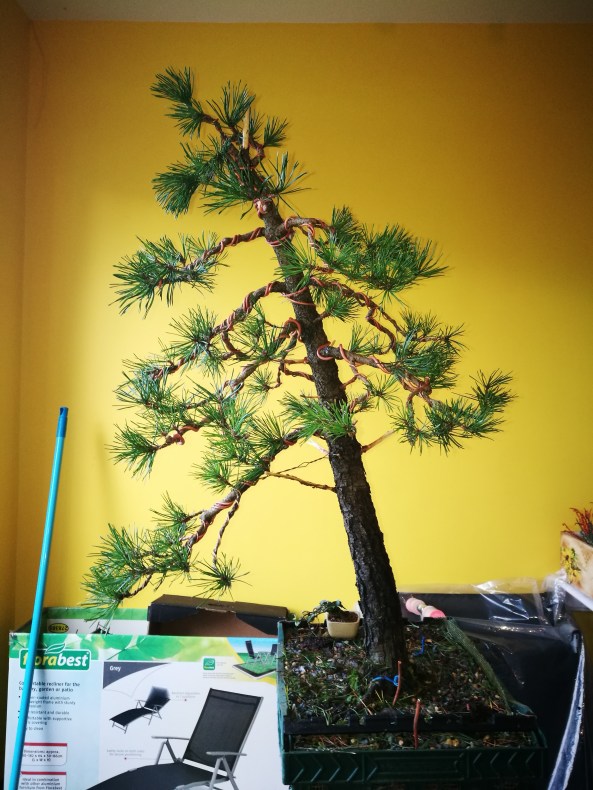
First up was Mark’s place. A shorter session than usual but we worked late and managed to wire the primary structure into two field grown trees. A first styling for a Japanese Red  and a Black Pine.
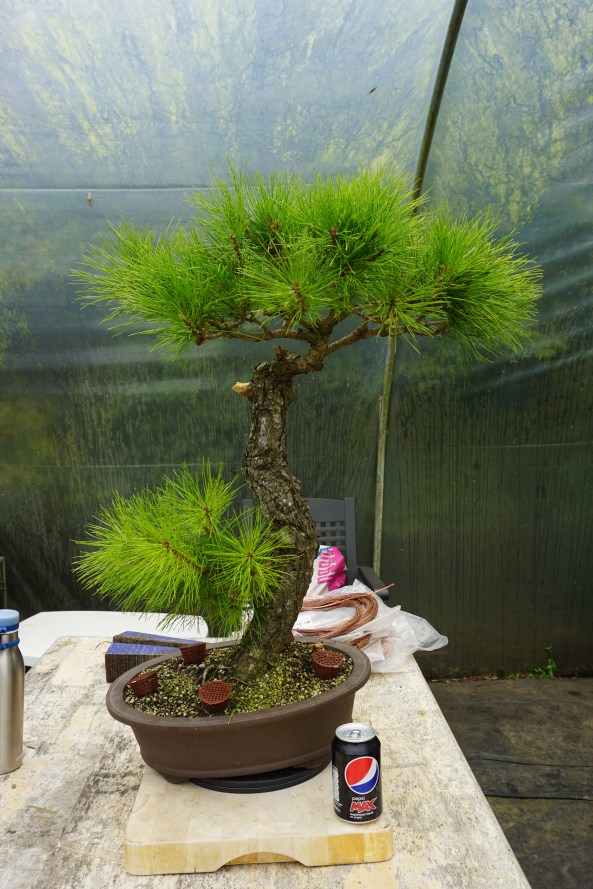
The lower branch was left to develope into a second trunk and also improve inverse taper. It can always be removed at a later date.

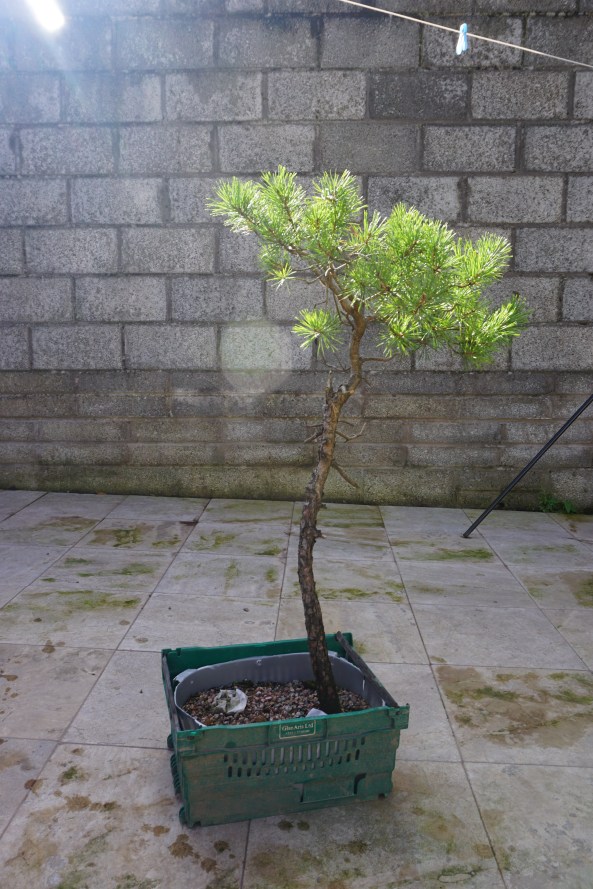
The next day was at Demot’s, again a first styling on a tall Scots Pine and some tweaking on a few Junipers.
He even gave me a tour of Cobh, the town where he lives and the world’s Second largest Natural Harbour.

Day 3 was Piotr’s place and yet another initial styling of a Pine, this time a Lodgepole.
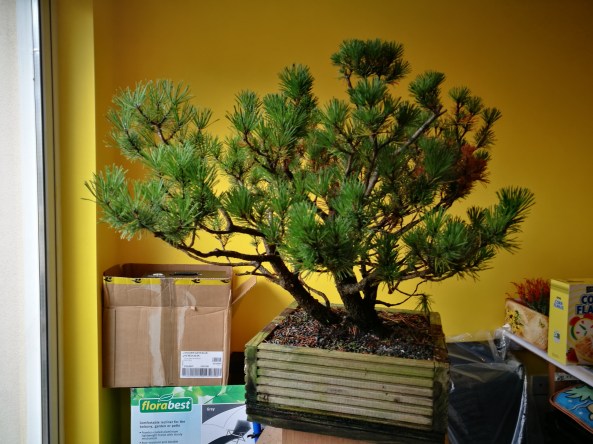
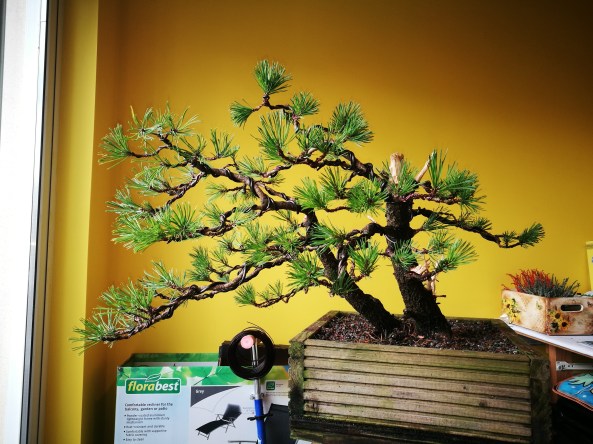
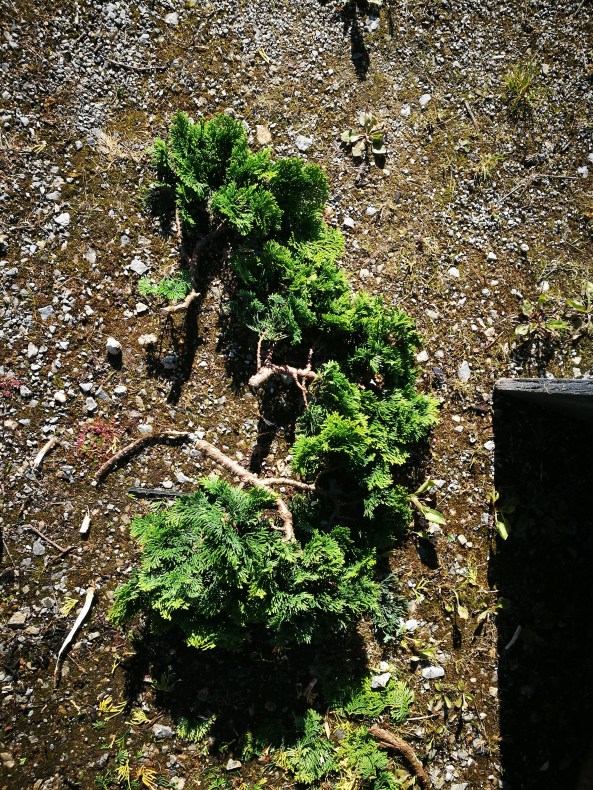
Next was a little Hinoki Cypress that was in need of thinning and a little wiring.
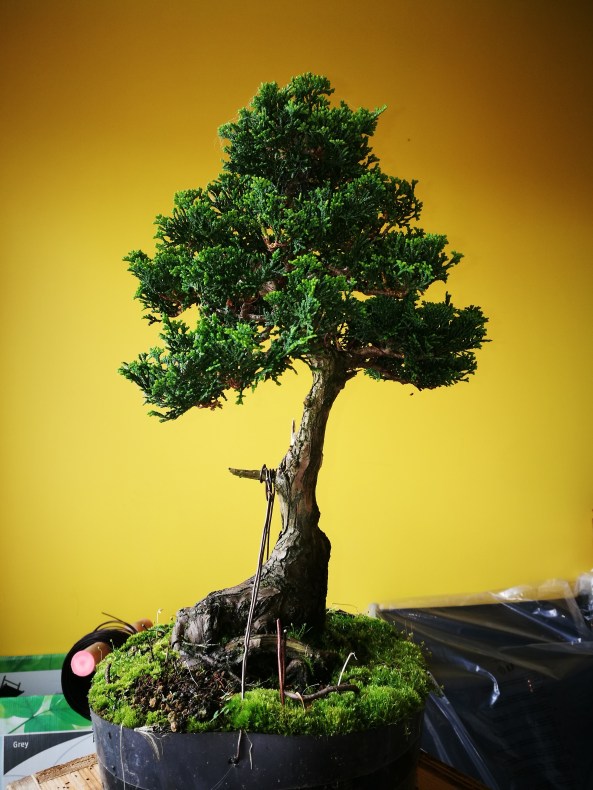
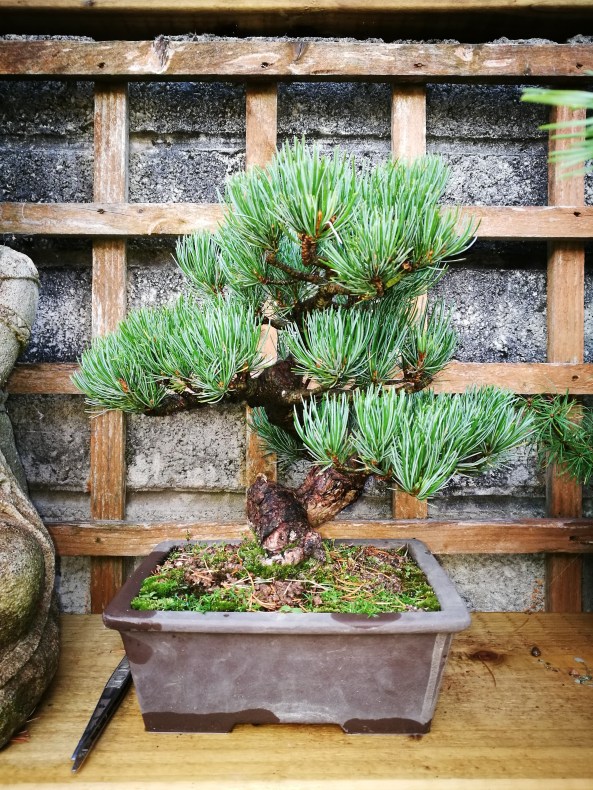
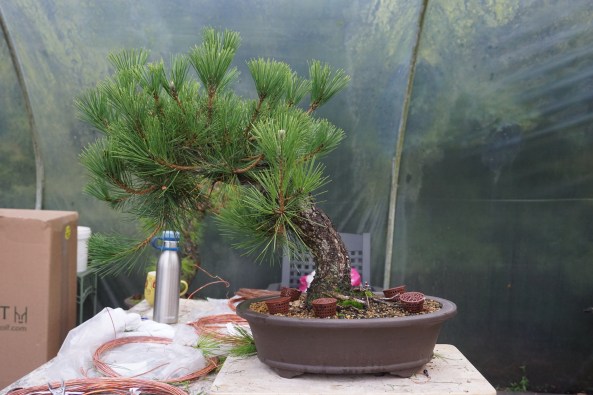
A Japanese White Pine

and then whilst having a few beers… another pine!

Day 4 was with Michael and a change of species, a yew. Not many photos here as I had a limited time period and a lot to discuss as well as work to get done.
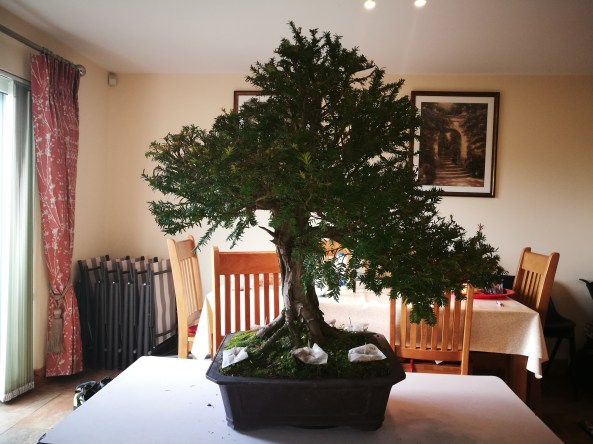
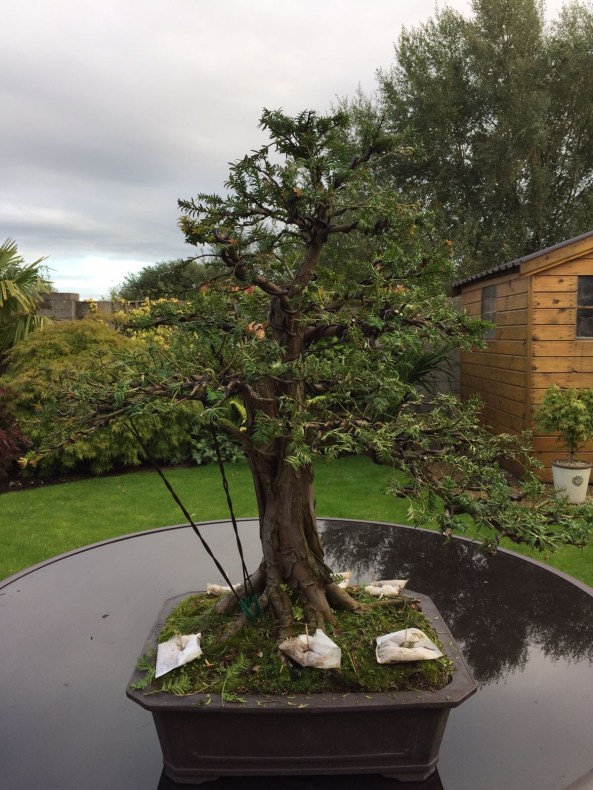
Day 5 was at Steve’s place and saw a fair bit of carving both by hand and with power tools. First was this Yew that had been carved previously but showed a lot of tools marks.
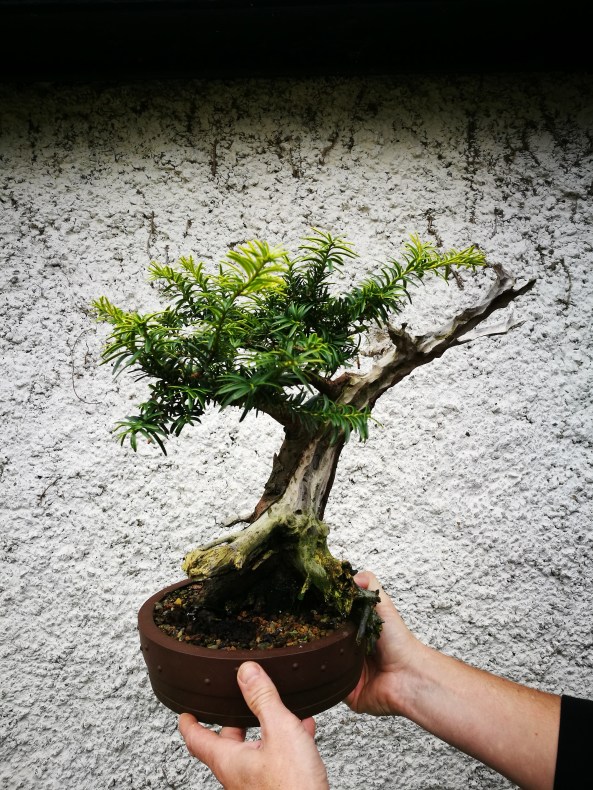
And after some work. Further refinement needed on the deadwood, but a step in the right direction.


Some initial carving on a new larch for Steve.

cof
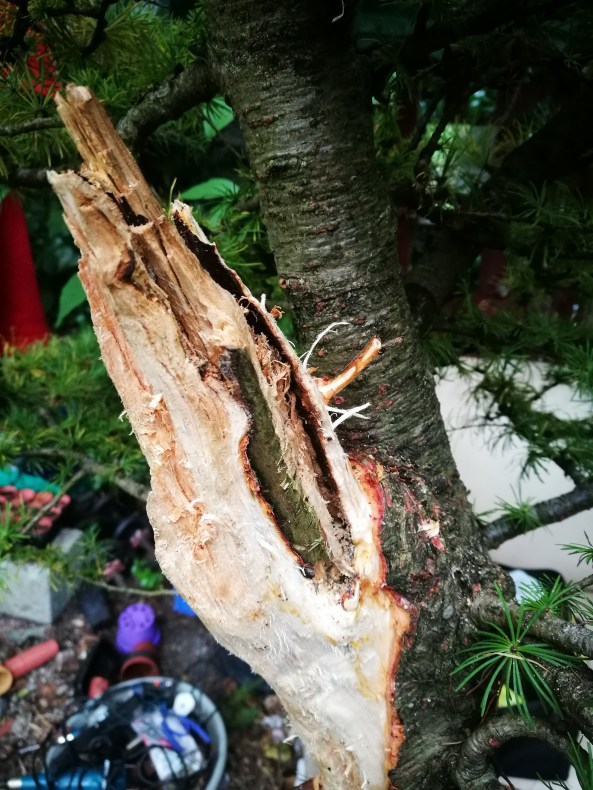
Sadly no finished pics, it was too dark 🙂

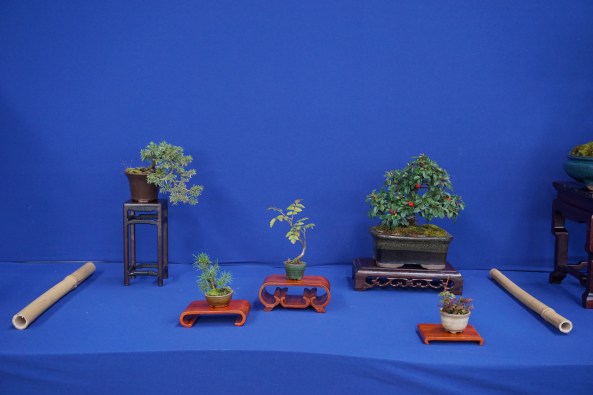
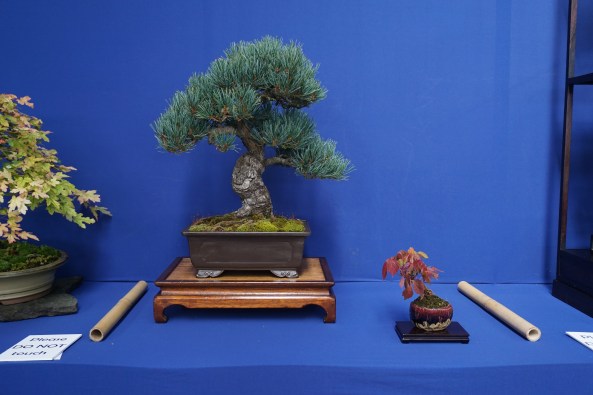
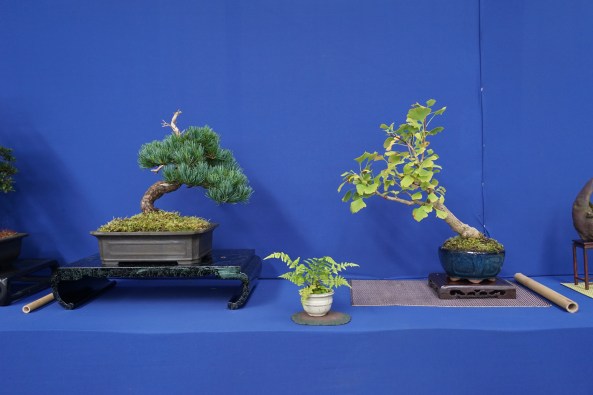
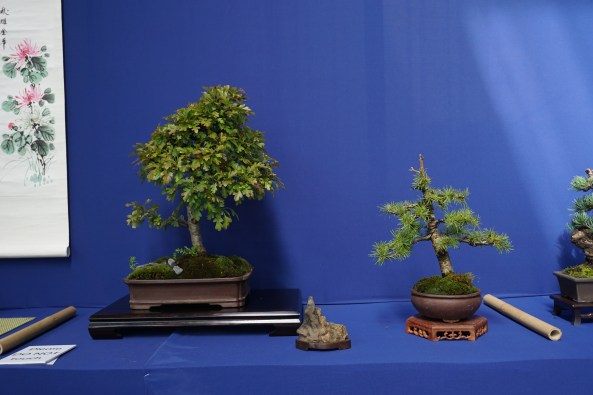
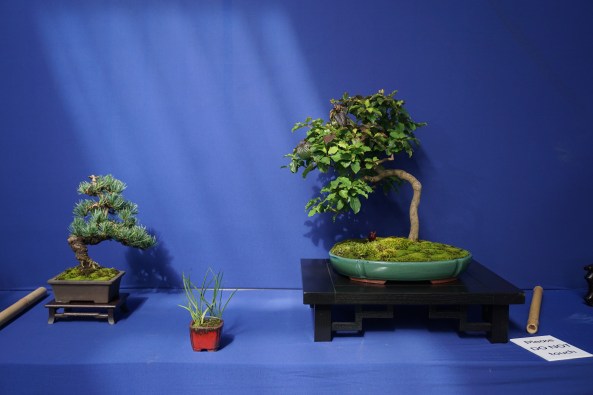
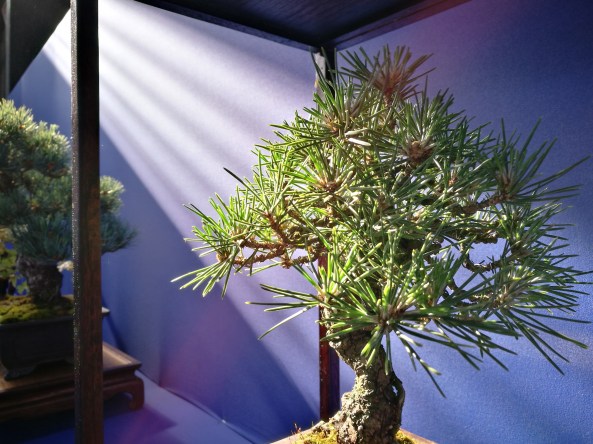
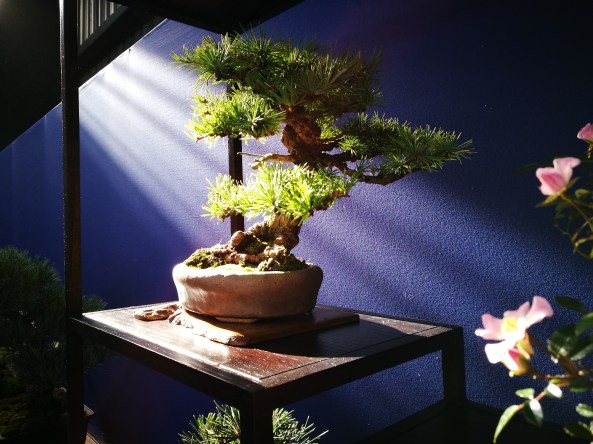
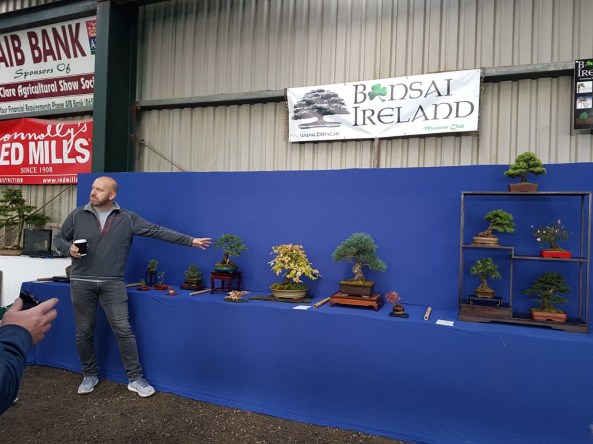
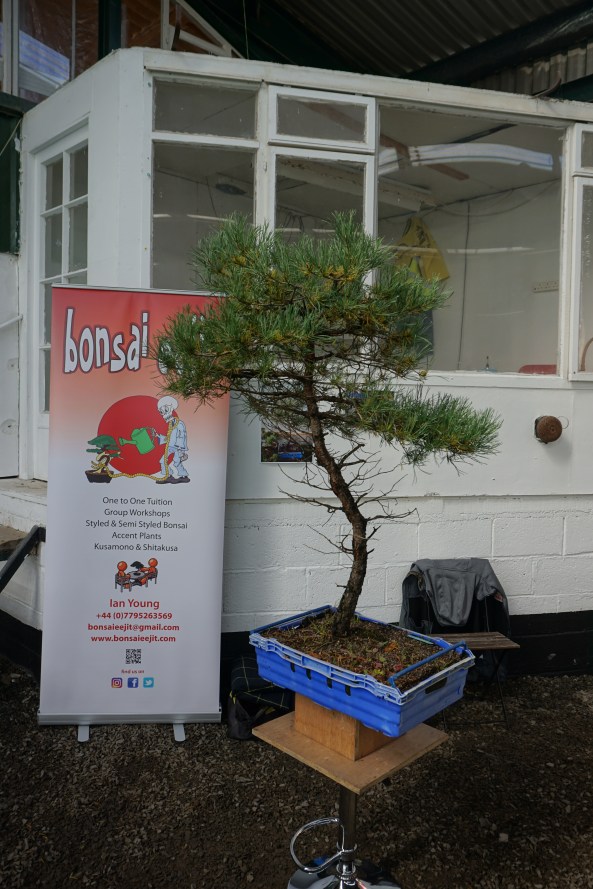
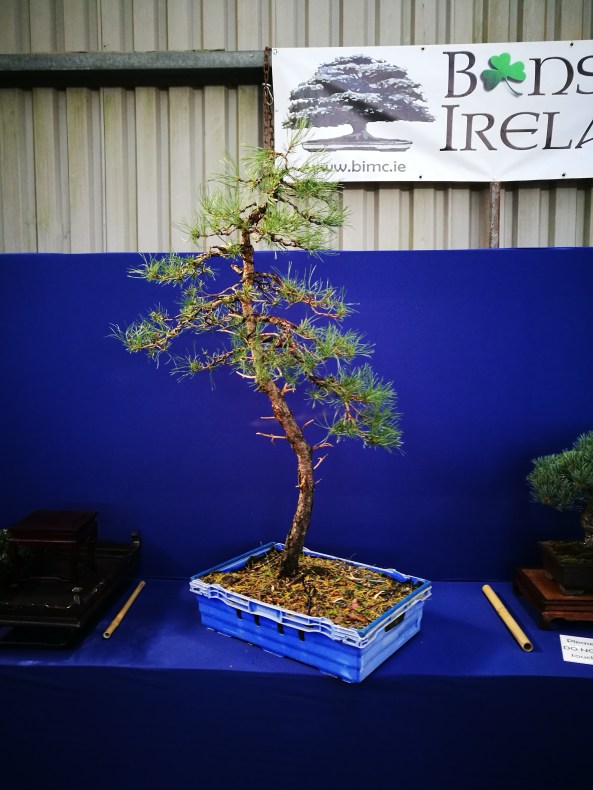
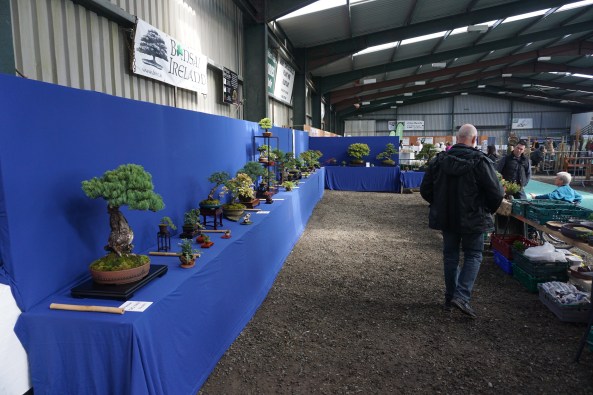
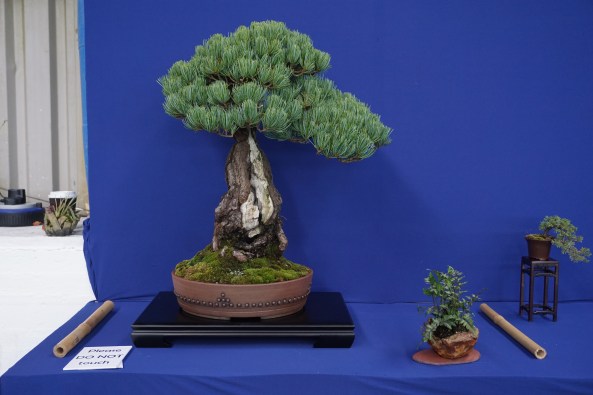
Day 6 was the Exhibition and I was delighted to put on a shohin display along with the club members. We set up and had an hour before opening, so we did a critique of the displays with all the club members and exhibitors. I was given a tall Scot’s Pine to style in the demo.
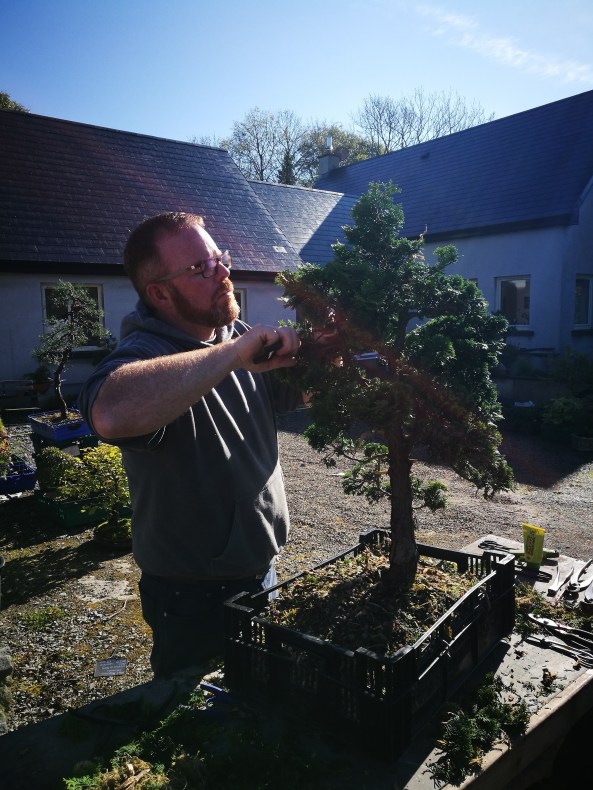
Day 7 was spent with Ray. The main tree was a hinoki cypress that we’d done initial work on 2 years ago. It had grown free for 2 years and was now ready of a new look. We decided to go for a different look that breaks a few rules as far as multi trunk trees go but I feel we created a bonsai that looks like a tree, not a bonsai.
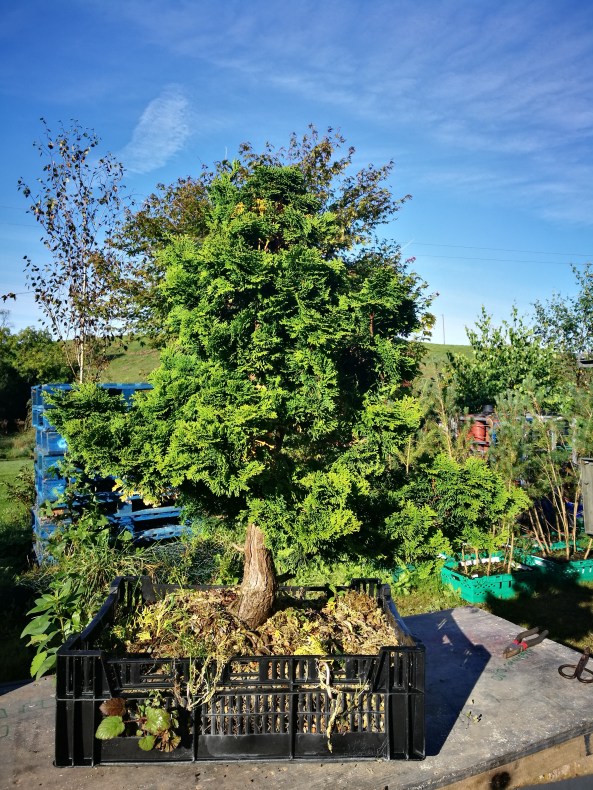


We also did a clearing out of a shohin Chinese Juniper. A nice start.

Day 8, my last day, was with Paul. A lover of Japanese Art and by the look of his garden and house, all things Japanese.

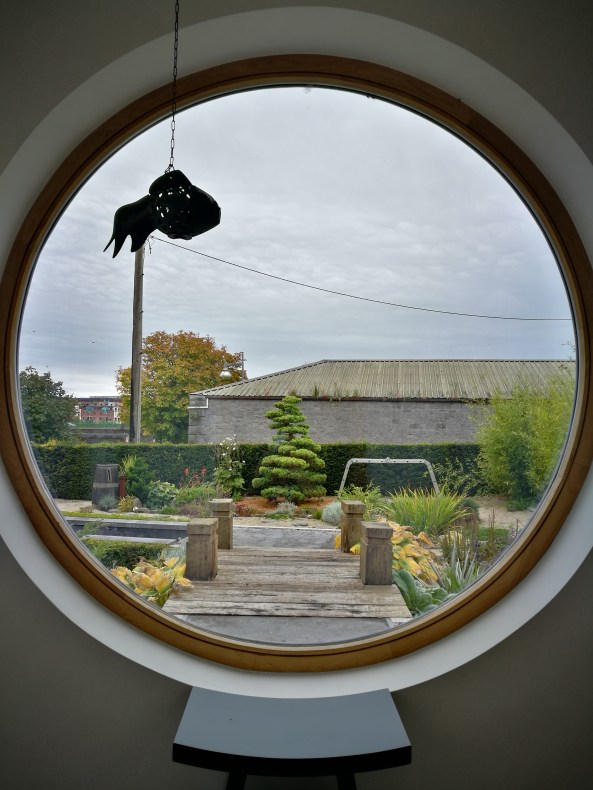
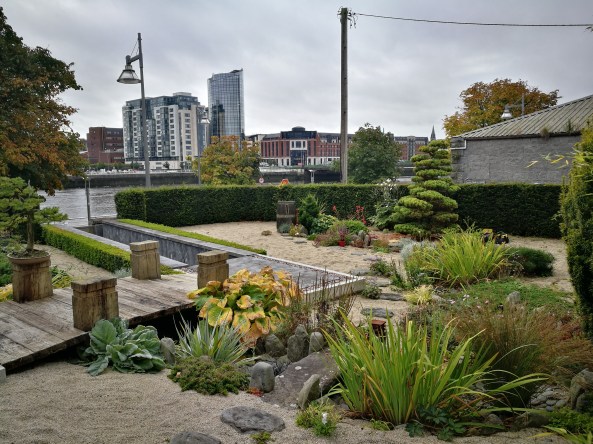
Room with a view. A truly inspiring place to stay.

Paul wanted some help with his niwaki style Pine in his garden. Starting at the top and working down 🙂

Afterwards we wired his Japanese White Pine making a few changes here and there to remove faults while keeping the original image that he liked when it was bought. A badly wire scarred apex had to be removed and replaced.
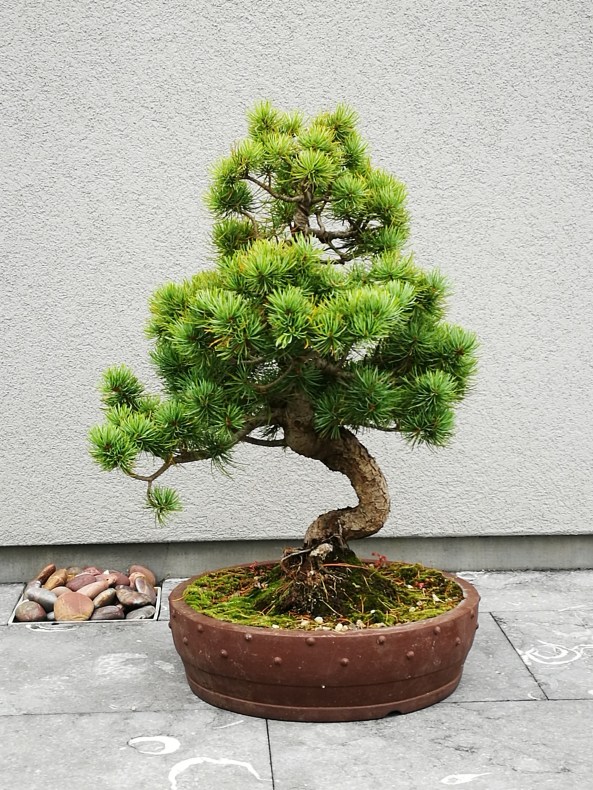
A massive thank you to all the guys who made this tour possible. I was looked after so well at every stop and the craic was mighty. The drive shown by this club is inspiring and this is only their 4th year. To deliver an exhibition to this standard, AND, there where trees there from 10 members, not all from a few with the higher level trees, shows what a fun club they are to be involved with. It was great to meet the newer members at the exhibition and get a chance to talk bonsai and share ideas for the future.

I look forward to seeing you all again soon and exploring new opportunities in 2018.

The Wild Atlantic Way

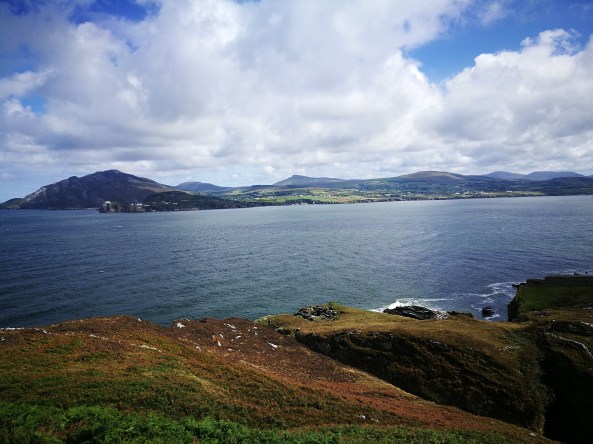
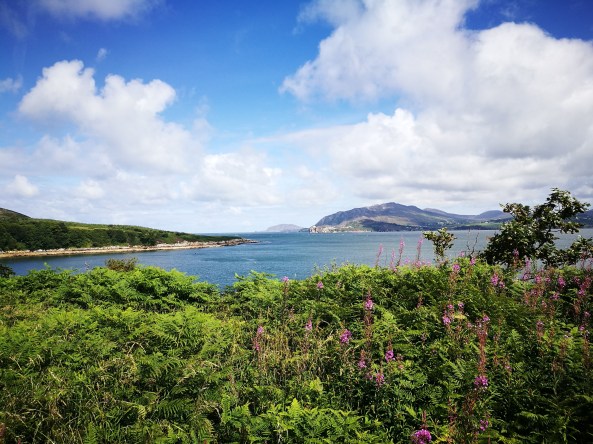
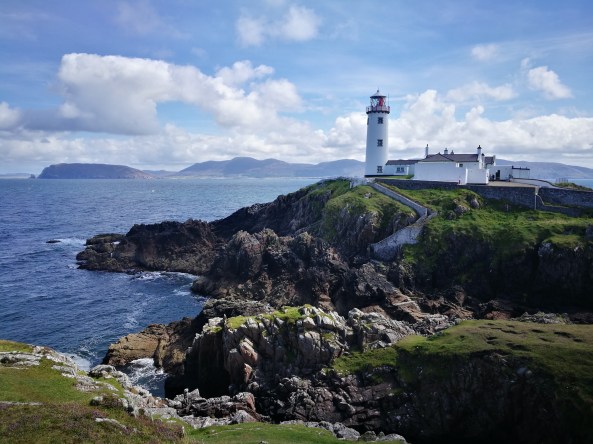
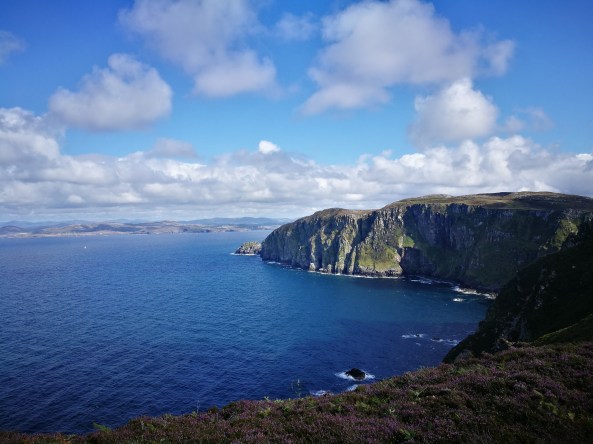
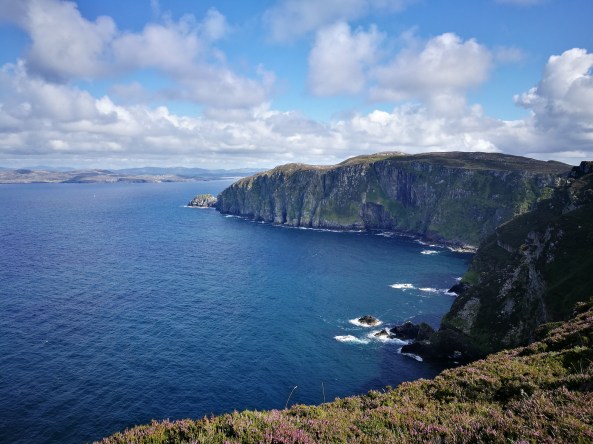
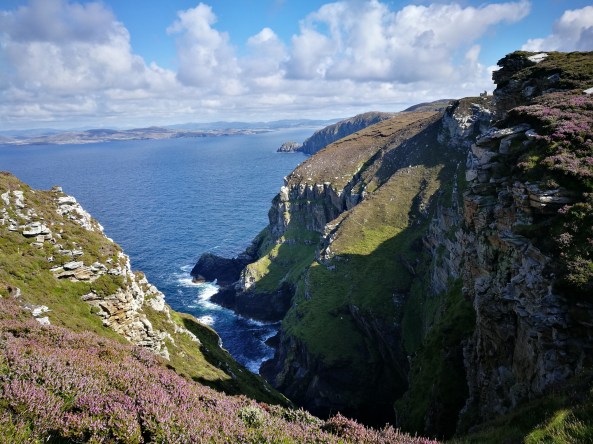
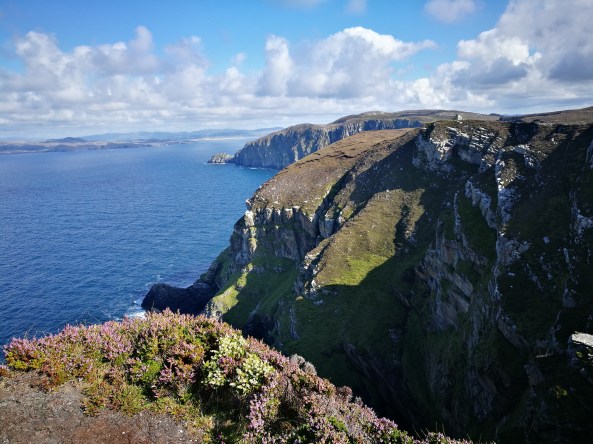
A few snaps taken on my Donegal trip.